

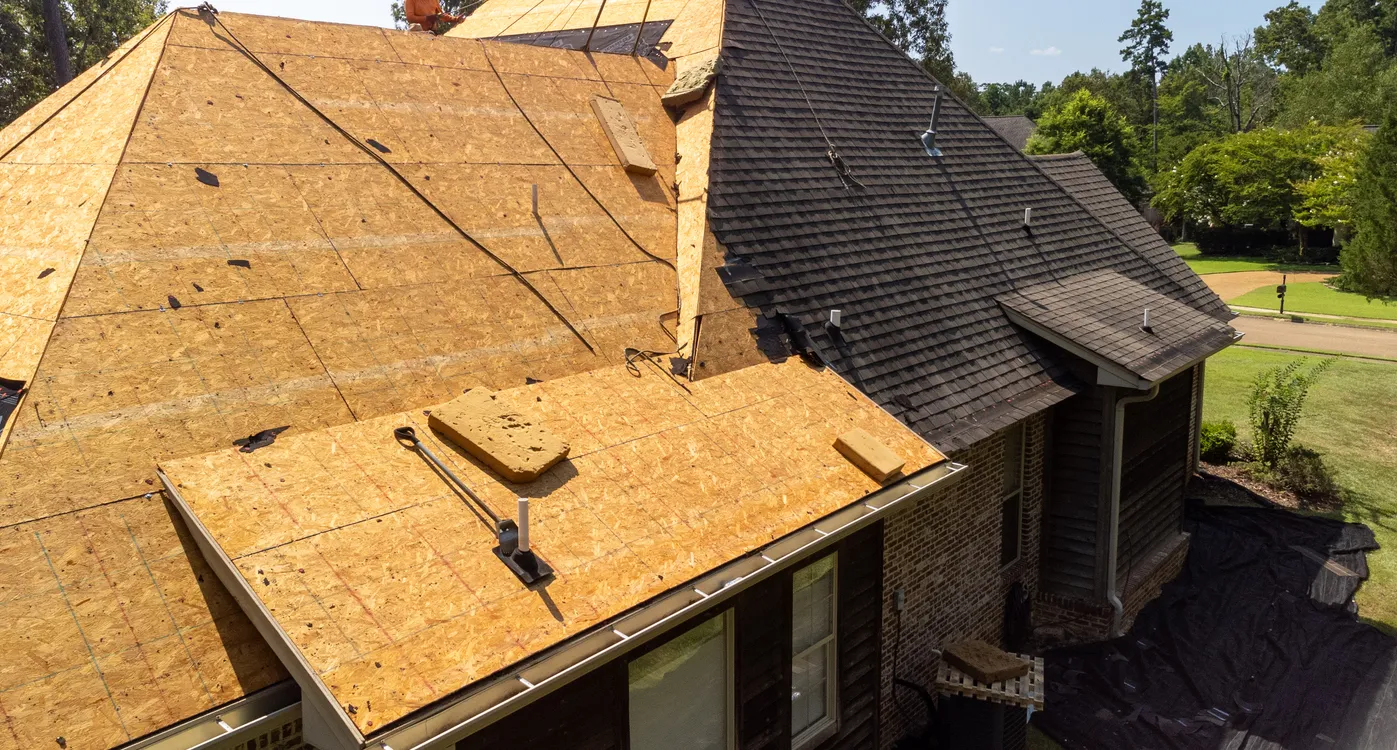
Total Roof Deck Insulation Services in Lafayette, LA
The roof is one of the most exposed parts of any home or business, and insulating below the deck is a step that a lot of properties skip entirely. It’s worth having on your radar, whether you’re planning a new build, replacing your roof, or simply looking for a better way to manage the heat and humidity building up above your ceiling.
Butcher Insulation has spent decades helping Acadiana properties manage exactly this kind of heat gain, recommending roof deck insulation where it makes sense and a different approach where it doesn’t. We’ll assess your roof structure, your attic’s current setup, and what you’re actually trying to solve before recommending anything.
One Seal, One Conditioned Space
Spray foam applied to the underside of your roof deck acts as both a thermal and vapor control layer, sealing off the complex assemblies most attics deal with, like valleys, dormers, and roof penetrations. Instead of isolating the attic from the rest of your home, this approach folds it into your conditioned space.
That shift matters most if you’re hoping to use your attic for more than storage, since a roof-deck-insulated attic behaves far more like the rest of your house.
Lower Bills Without Changing the Roofline
By sealing the roof deck, you reduce the heat gain and loss happening above your ceiling, which lowers the demand on your HVAC system throughout the year. Since the insulation goes on the underside of the deck itself, this improvement doesn’t require any change to your roofing material or exterior appearance.
This consistency carries through every season, not just the months when your AC is working hardest, so the savings add up whether it’s July or January.
Built for New Construction and Reroofing Projects
New construction is often the simplest time to install roof deck insulation, since the structure is fully accessible before drywall and finishes go in. It’s also worth considering right after a roof replacement, when the deck is already exposed and adding insulation doesn’t mean extra disruption to your property.
Either way, timing the work around a stage your property is already going through means less disruption and a more straightforward install overall.
Protection at the Roof’s Weakest Points
Spray foam’s ability to expand and conform makes it well-suited to sealing complex roof assemblies that traditional insulation struggles to reach. That includes areas around vents, valleys, and other penetrations where air and moisture commonly find their way in.
Left unsealed, these are often the exact spots where a roof loses efficiency over time, so addressing them directly tends to pay off well beyond the initial install.
Roof Deck Insulation vs. Attic Floor Insulation: What’s the Real Difference?
Both approaches aim to keep heat and moisture from working against your home, but they go about it differently:
We’ll walk through both options with you and recommend the one that actually matches your goals for the space, not just the one that’s easiest to install.
Have Questions About Your Roof Deck Insulation Project?
It can be hard to know exactly what solutions your home needs, and that’s exactly why it helps to talk it through with someone who’s assessed plenty of Acadiana roofs before. We’ll look at your structure, walk you through what we’re seeing, and lay out whether roof deck or attic floor insulation actually makes sense for your property.
There’s no obligation attached to that conversation, just a clearer picture of what your roof needs and what it would take to get there.