

Skip to content
What's Happening Beneath Your FeetThe Fix for Buckling Floors and Cold Spots

If your floors feel drafty, soft, or slightly warped in spots, the problem usually isn’t the flooring itself. It’s what’s happening in the crawl space underneath. Butcher Insulation treats subfloors as their own application, addressing moisture first and insulating second so the fix actually holds.

Get a Free Subfloor Insulation Estimate

Tell us what you’re noticing in your floors, and we’ll schedule a visit to see what’s going on underneath your home.

Contact Us
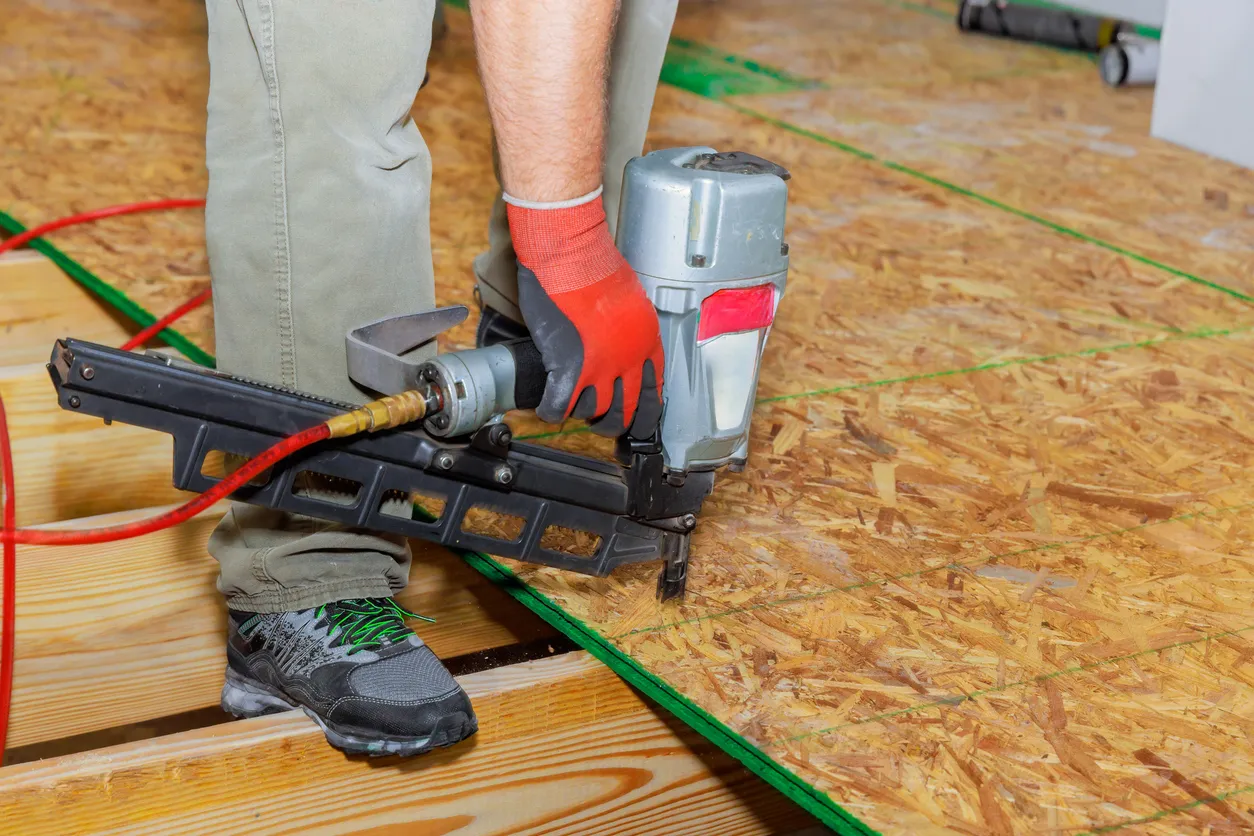
Person using pneumatic nail gun to secure oriented strand board subfloor, wearing red gloves and work shoes.

Stronger Subfloor Insulation Services in Lafayette, LA

Pier-and-beam homes and older construction across Acadiana are especially prone to buckling or rotting floors, and the cause almost always traces back to moisture building up in the crawl space below. Subfloor insulation only works if that moisture problem gets addressed first, which is why we don’t skip straight to installing material.

Butcher Insulation evaluates what’s happening underneath your home before recommending anything, dehumidifying and drying the space when needed, then insulating the subfloor to protect your investment going forward. It’s a more thorough approach, and it’s the one that actually holds up.

What Subfloor Insulation Solves

Subfloor Insulation Features That Protect Your Home From the Ground Up

Addressing the Cause, Not Just the Symptom

Excessive humidity in a crawl space works its way into the wood above it, causing floors to buckle, warp, or feel soft underfoot over time. We dehumidify and dry the space first, then insulate the subfloor to keep that moisture from building back up.

That two-step approach matters, since insulating over an existing moisture problem only traps it in place rather than solving it.

Keeping Conditioned Air Where It Belongs

Most homeowners think of energy loss in terms of attics and windows, but an uninsulated subfloor is working against your HVAC system in exactly the same way. In elevated construction buildings, air can slip out through the floor, which means your system ends up replacing air it has already conditioned once.

Insulating the subfloor closes off that loss, so the comfort you’re paying for actually stays where you put it.

Fewer Frozen Pipes, Fewer Headaches

Insulating the subfloor adds a layer of protection against the occasional cold snap that puts exposed pipes at risk of freezing. A burst pipe from a hard freeze can mean costly repairs and water damage, so this added protection is worth factoring in even in a climate where freezing temperatures are the exception rather than the rule.

It’s a smaller benefit compared to moisture and energy savings, but it’s one more reason subfloor insulation pays off across the life of your home.

Temperature-Stable Floors in Every Season

That draft doesn’t just make the floor and room feel uncomfortable. It works both ways, letting outside air rise up into your home while conditioned air leaks down into the crawl space below, making it harder for your HVAC system to maintain a consistent temperature throughout the house.

Insulating the subfloor closes that gap, so the room you’re sitting in holds its temperature instead of fighting a constant draft. That stability also means your HVAC system isn’t working overtime to compensate, which shows up as a steadier bill each month.

The Step Most Companies Skip

Why Moisture Control Comes Before Subfloor Insulation

Insulating a damp or actively moist crawl space doesn’t fix the underlying problem. It just traps that moisture against your subfloor, which can lead to worse damage down the road. Before any insulation goes in, we look at:

  • Whether standing water or excess humidity is present in the crawl space
  • How well the space is currently ventilated or sealed
  • Any visible signs of wood rot, mold, or previous water damage
  • Whether dehumidification is needed before insulation can be installed effectively

Skipping this step is one of the most common reasons subfloor insulation fails to solve the problem it was meant to fix. We won’t install insulation over a moisture issue that hasn’t been addressed first.
Hear From Our Customers

"I called on Monday 2-27-23 to get info about spraying insulation in my cargo trailer. I expected to be on a waiting list for a couple of weeks, wrong. They showed up on 2-28-23. They were quick and efficient, and cleaned up after they finished."

- William

"I would like to comment on your top quality Service Tech Chris Blocker that come to my rental property yesterday afternoon. Mr. Blocker was in constant contact with me, apprized me of the situation and that he had repaired the problem."

- Marc

"I would like to show appreciation to Brett Broussard for saving me on the side of the road with a flat tire!!!!! I really appreciate it! I wanted to give him something for helping me but I don't carry cash so a gift card is coming your way!!!! Thanks!!!!"

- Tasha

"I am sending this email to thank your staff for the great service received at my home. Nicole has a very personable phone etiquette and was helpful and patient every time I called. Chris, Don and Anthony were all prompt and arrived at the time scheduled."

- Elizabeth

"Your wonderful company sprayed insulation into my home that is under construction in Breaux Bridge, LA. It was AMAZING!!! It was 43 degrees outside and as soon as I walked into the house it was WARM and we don’t even have heat to the house yet! Your guys were fast and very nice. I am very glad to have hired ya’ll! "

- Roxanne

"Recently, I contracted Butcher to install insulation in my attic. They did a fantastic job!! Very professional, very clean work! I am so happy that I hired them because I don't think any other company would have been able to do what they did at my home."

- Jamie
FAQs

What Acadiana Homeowners Ask Before Insulating Subfloors

Floor buckling and warping in Acadiana homes are almost always tied to excess moisture in the crawl space underneath. Wood is porous, so when humidity builds up below the house, it gets absorbed into the subfloor and floor joists. That moisture causes the wood fibers to expand, and as they expand unevenly, the floor above starts to buckle, cup, or feel soft in certain spots.

A few conditions tend to make this issue worse:

  • Poor crawl space ventilation, which traps humid air instead of letting it escape
  • Standing water or drainage issues under the home after heavy rain
  • Older or missing vapor barriers, letting ground moisture rise directly into the crawl space
  • Pier-and-beam construction, which is common across Acadiana, tends to have more airflow beneath the living space than a slab foundation

Insulating the subfloor won’t resolve buckling on its own if the moisture problem underneath hasn’t been addressed first. That’s why we assess and dry out the crawl space before recommending any insulation work, so the fix actually holds instead of masking a problem that’s still there.

No, though pier-and-beam construction is especially common across Acadiana and particularly prone to drafts and moisture issues underneath. Homes on other foundation types can also benefit from subfloor insulation, depending on their construction and crawl space conditions.

Signs include visible dampness, a musty smell, wood rot, or floors that feel soft or uneven in certain areas. If you’re noticing any of these, it’s worth having your crawl space assessed before the issue spreads further into your home’s structure.

Closed-cell spray foam is what we typically recommend for subfloors because it provides a vapor barrier, which fiberglass doesn’t offer on its own. That moisture resistance matters most in crawl spaces, where humidity is typically the root cause of the problem in the first place.

We’ll make a personalized recommendation for your project based on what we find during your assessment.

Explore Financing Options

Subfloor Insulation That Fits Your Budget, Not Just Your Foundation

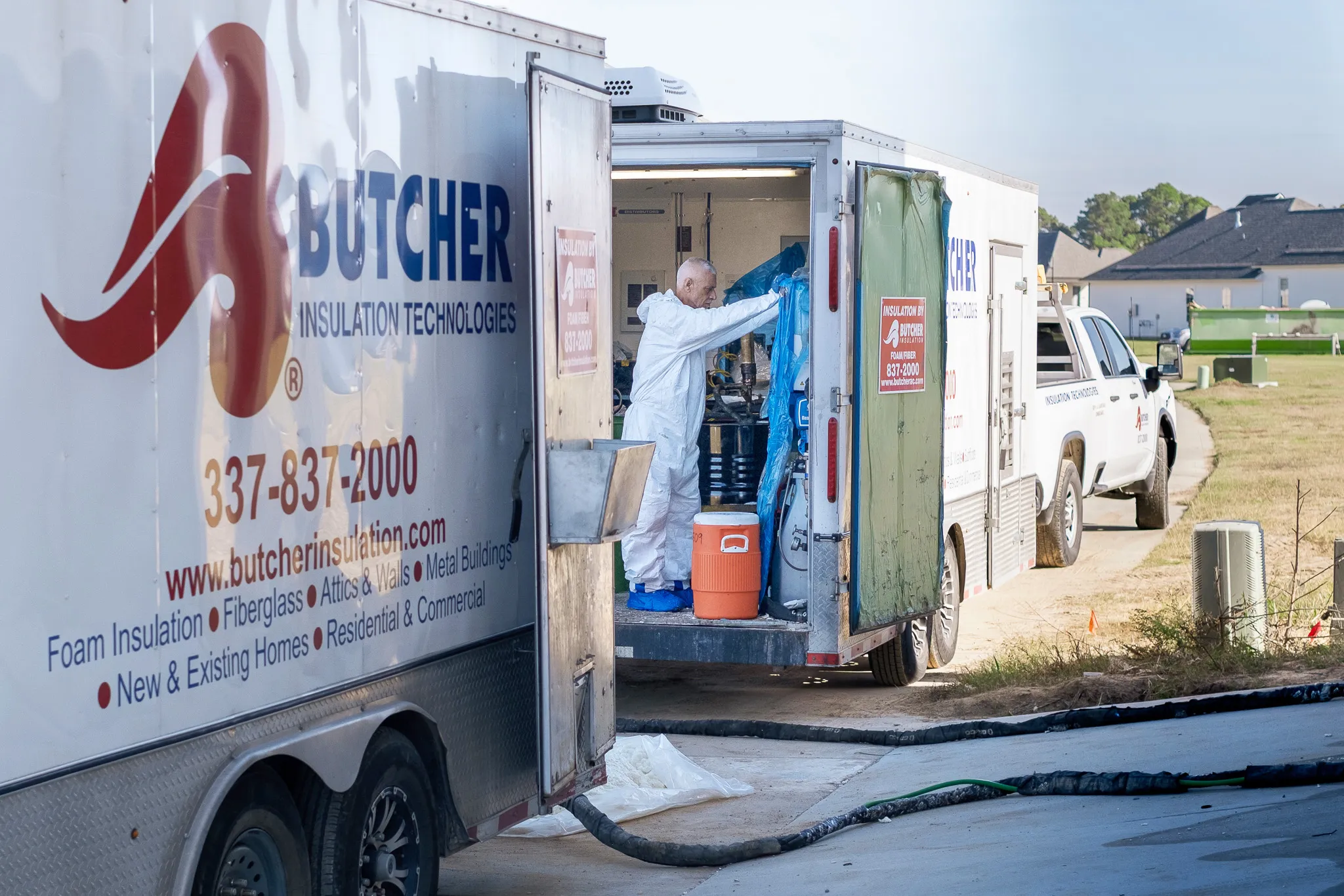
Worker in white protective suit handling insulation equipment from Butcher Insulation truck at a home.

Not Sure What’s Going On Under Your Floors?

Buckling floors, cold spots, and rising energy bills often trace back to something happening beneath your home that’s easy to miss from above. Our team will get underneath your property, tell you honestly what we find, and recommend whether moisture control, insulation, or both make sense for your situation.

Reach out today to schedule your free estimate, or give us a call to talk through what you’re noticing with someone on our team.

Play Our Jingle
Butcher Air Conditioning
Play Our Jingle
Serving Acadiana Since 1949
0:00 / 0:29