

Skip to content
Beyond Four Walls and a RoofA Pole Barn Built to Handle More Than the Weather

Pole barns take on a lot: workshops, storage, equipment, sometimes livestock, sometimes all of the above. Without insulation, they also take on Louisiana’s heat and humidity, which can make them miserable to work in and hard on whatever’s stored inside. Butcher Insulation treats pole barns as their own application, with a material recommendation built around how you actually use the space.

Get a Free Pole Barn Insulation Estimate

Tell us how you use your pole barn, and we’ll schedule a visit to recommend the insulation that fits it.

Contact Us
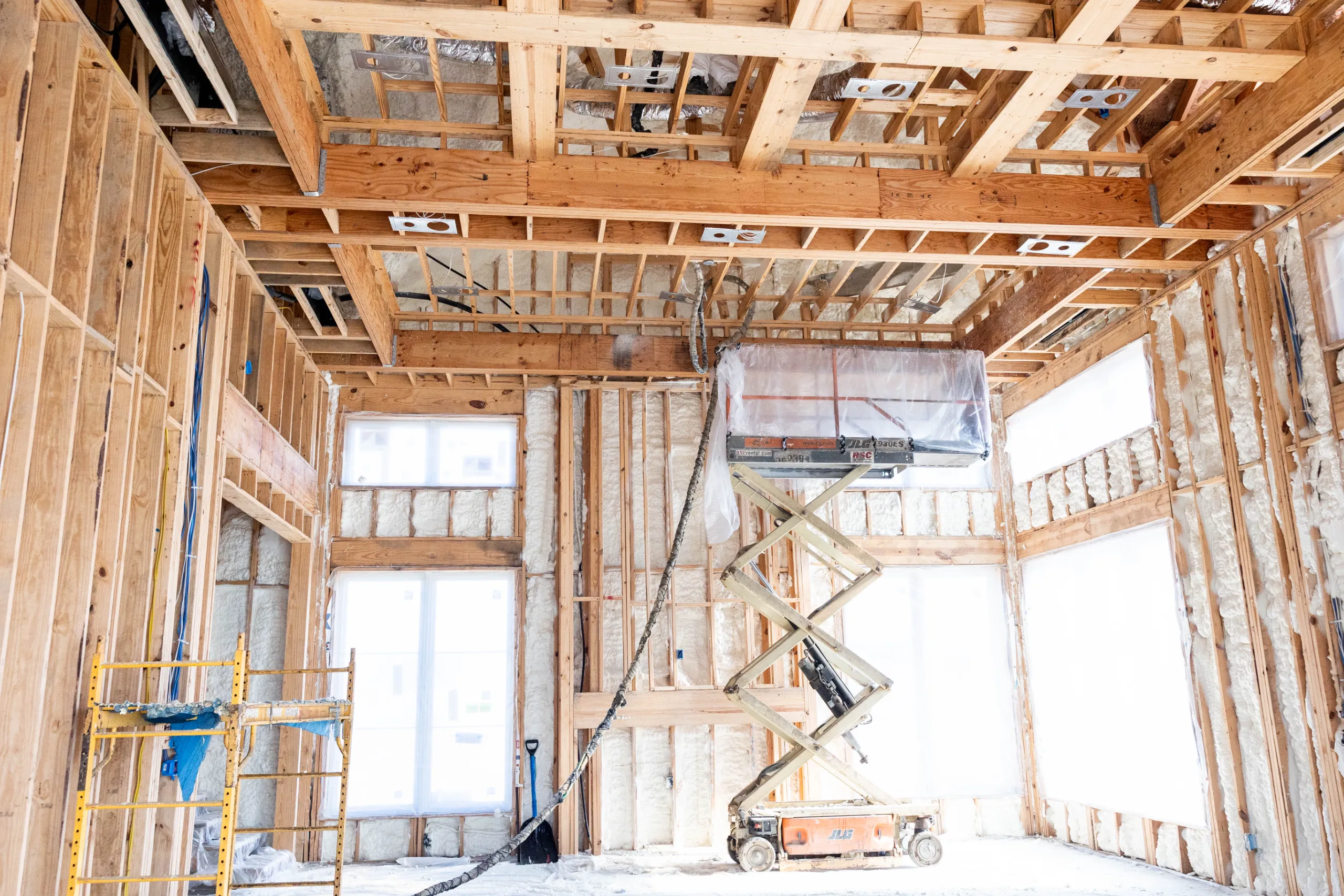
Residential interior under construction with exposed wood framing, spray foam insulation, scaffolding and scissor lift

Professional Pole Barn Insulation Services in Lafayette, LA

Post-frame construction made pole barns a fast, affordable way to build large structures, and that same design is still popular today for garages, workshops, storage buildings, and agricultural use across Acadiana. What often gets overlooked is that a pole barn without insulation is fighting the same heat and humidity as a home, just without any of the protection.

Butcher Insulation has insulated pole barns across the region for property owners who use them for everything from equipment storage to full workshops. We’ll assess how you use your space and recommend the material that keeps it comfortable and protected without overspending on more than you need.

What a Pole Barn Gains

Pole Barn Insulation Features Built for How You Actually Use the Space

A Space You Can Actually Work In

Insulating a pole barn keeps the indoor temperature far more stable, which matters even if you’re only in the space for a few minutes at a time. That difference adds up if your pole barn doubles as a workshop, a home gym, or anywhere you spend real time rather than just passing through.

Insulation That Pays for Itself Over Time

Closed-cell foam insulation can significantly reduce heating and cooling costs for a pole barn, since it seals the structure against outside air far more effectively than an uninsulated post-frame building. For a space that runs equipment, lighting, or climate control regularly, that reduction adds up across the life of the building.

Guarding Against Rust, Mildew, and Moisture Damage

Insulation reduces airflow through a pole barn’s structure, which helps prevent the unwanted moisture and condensation that leads to rust, mildew, and general wear on whatever you’re storing. Closed-cell foam is usually the strongest fit here, since it addresses both moisture and temperature extremes at once.

One Structure, Different Needs

Matching Pole Barn Insulation to the Way You Actually Use the Space

Whether your pole barn holds farm equipment, serves as a workshop, or stores vehicles and materials for a small business, we assess your specific use case before recommending a material. The right insulation approach depends heavily on how the space gets used day to day.

A few common scenarios we run into:

  • Workshops and home gyms: consistent comfort matters most, since people are actually spending time inside
  • Equipment and vehicle storage: moisture control is the priority, protecting against rust and long-term wear
  • Agricultural buildings: temperature swings and humidity both need addressing, especially for anything sensitive to climate
  • Commercial and business use: durability and moisture protection typically take priority over fine-tuned comfort

We’ll talk through how you use your pole barn now, and how you might want to use it down the line, before recommending a material.
Hear From Our Customers

"I called on Monday 2-27-23 to get info about spraying insulation in my cargo trailer. I expected to be on a waiting list for a couple of weeks, wrong. They showed up on 2-28-23. They were quick and efficient, and cleaned up after they finished."

- William

"I would like to comment on your top quality Service Tech Chris Blocker that come to my rental property yesterday afternoon. Mr. Blocker was in constant contact with me, apprized me of the situation and that he had repaired the problem."

- Marc

"I would like to show appreciation to Brett Broussard for saving me on the side of the road with a flat tire!!!!! I really appreciate it! I wanted to give him something for helping me but I don't carry cash so a gift card is coming your way!!!! Thanks!!!!"

- Tasha

"I am sending this email to thank your staff for the great service received at my home. Nicole has a very personable phone etiquette and was helpful and patient every time I called. Chris, Don and Anthony were all prompt and arrived at the time scheduled."

- Elizabeth

"Your wonderful company sprayed insulation into my home that is under construction in Breaux Bridge, LA. It was AMAZING!!! It was 43 degrees outside and as soon as I walked into the house it was WARM and we don’t even have heat to the house yet! Your guys were fast and very nice. I am very glad to have hired ya’ll! "

- Roxanne

"Recently, I contracted Butcher to install insulation in my attic. They did a fantastic job!! Very professional, very clean work! I am so happy that I hired them because I don't think any other company would have been able to do what they did at my home."

- Jamie
FAQs

From the Ground Up: Pole Barn Insulation FAQs

Closed-cell spray foam is usually the strongest option for pole barns, since it addresses the two most common issues these structures face: moisture and extreme temperatures. That said, the right choice depends on how you use the space and what your budget looks like, which is why we assess each pole barn individually.

Existing pole barns can be insulated after the fact, not just during initial construction. Since post-frame buildings typically have open interior framing, our crews can often access the structure directly without the need for major demolition, which makes retrofitting a more straightforward project than it would be in a fully finished home.

It depends on what’s inside and how sensitive it is to temperature and humidity. Even barns that aren’t used daily can benefit from insulation if they’re storing equipment, materials, or vehicles that would otherwise be exposed to Louisiana’s heat and moisture year-round.

Yes, to a meaningful degree. Metal roofing on an uninsulated pole barn can make rain and hail sound significantly louder inside the structure. Adding insulation, particularly spray foam, helps dampen that noise along with providing its usual temperature and moisture benefits.

For most pole barns, insulating both the roof and walls delivers the best results, since metal buildings gain and lose heat quickly through every exposed surface. That said, priorities can shift based on how the space is used:

  • Roof-only insulation helps if temperature swings from direct sun exposure are the main concern, such as in storage buildings
  • Wall insulation matters more in spaces where people spend time working, since it affects comfort at ground level
  • Full insulation (roof and walls) offers the most complete protection against Louisiana’s heat, humidity, and condensation, and is typically recommended for workshops, home gyms, or any space used regularly

We’ll walk through your structure and recommend the combination that fits your budget and how you actually use the space.

Explore Financing Options

Pole Barn Insulation That Doesn’t Have to Wait on Your Budget

Butcher Insulation Technologies truck side with red logo, phone 337-837-2000 and website butcherinsulation.com

Let’s Talk About What’s Actually Happening in Your Barn

A pole barn holds a lot of value, whether that’s equipment, a workshop you’re proud of, or animals that depend on stable conditions. It’s easy to assume the heat and humidity are just part of the deal, but that’s usually not the case. Walk us through how you use your space, and we’ll tell you plainly what’s worth fixing, what isn’t, and what it would take to get there.

Reach out to our team today to get started with a free estimate and fast scheduling.

Play Our Jingle
Butcher Air Conditioning
Play Our Jingle
Serving Acadiana Since 1949
0:00 / 0:29