
Spray Foam & Fiberglass Insulation Services in Broussard, LA
A floor that feels cold no matter the season. A wall that’s warm to the touch on one side of the house and not the other. An AC unit that runs constantly but never quite catches up. Homeowners tend to write these off as just how the house is, when they’re usually signs that insulation somewhere, in the walls, under the floor, along the roofline, isn’t doing its job.
At Butcher Insulation, we make it easy to find a fix for these issues. We’ll track down where air and moisture are getting through, seal it correctly, and get your home to a point where it holds a steady temperature without your energy bill climbing every month.
Built to Hold Its Value Over Time
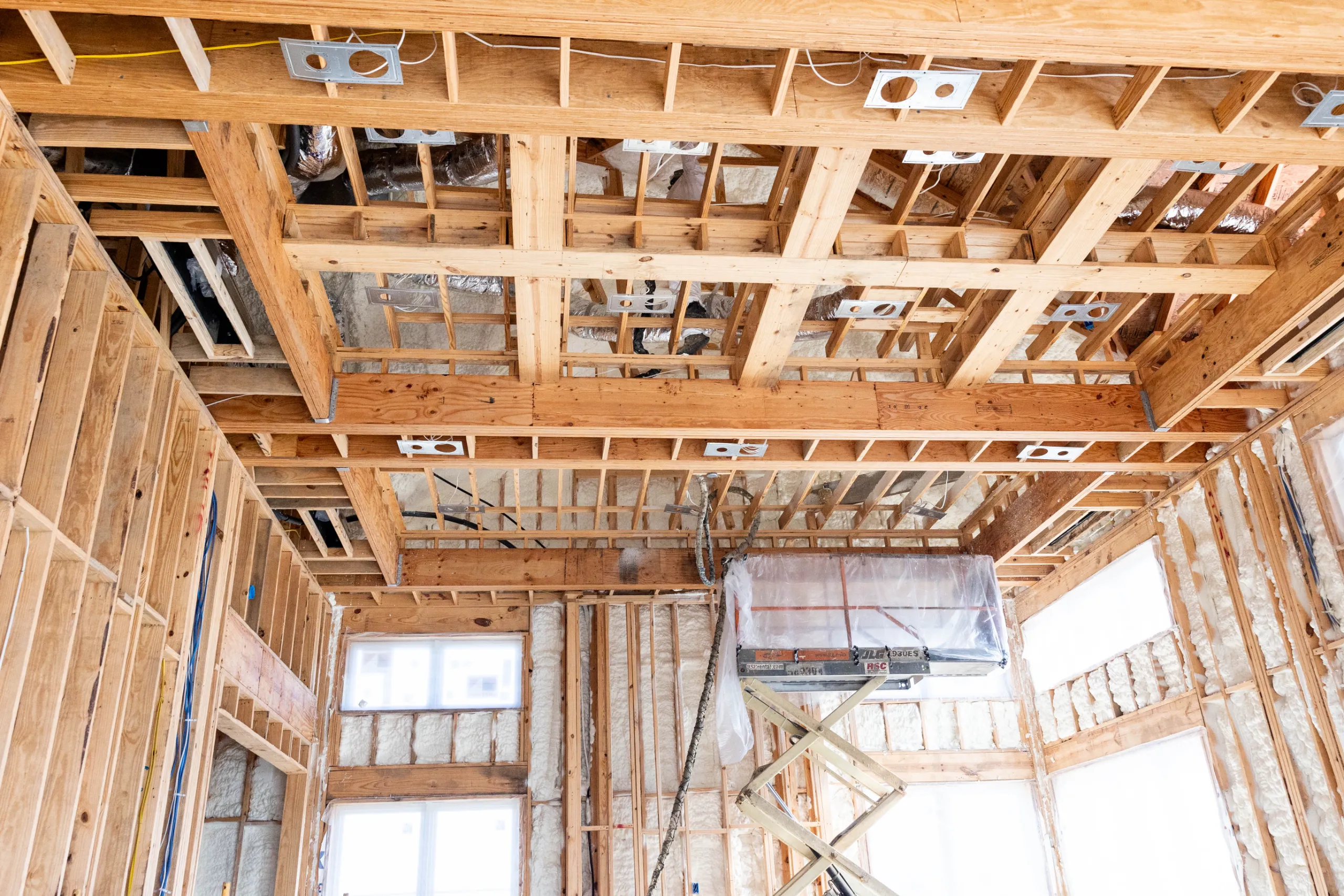
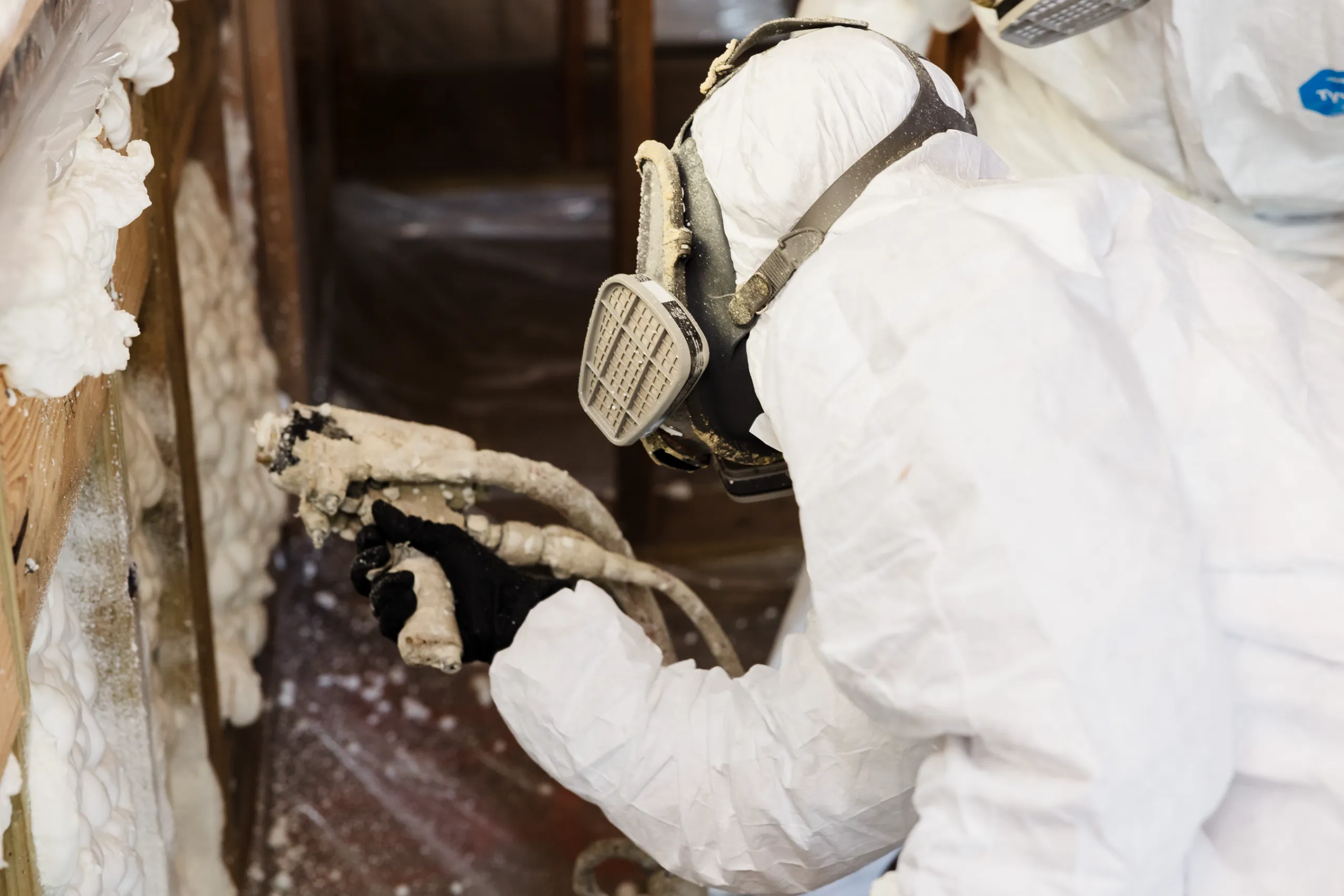
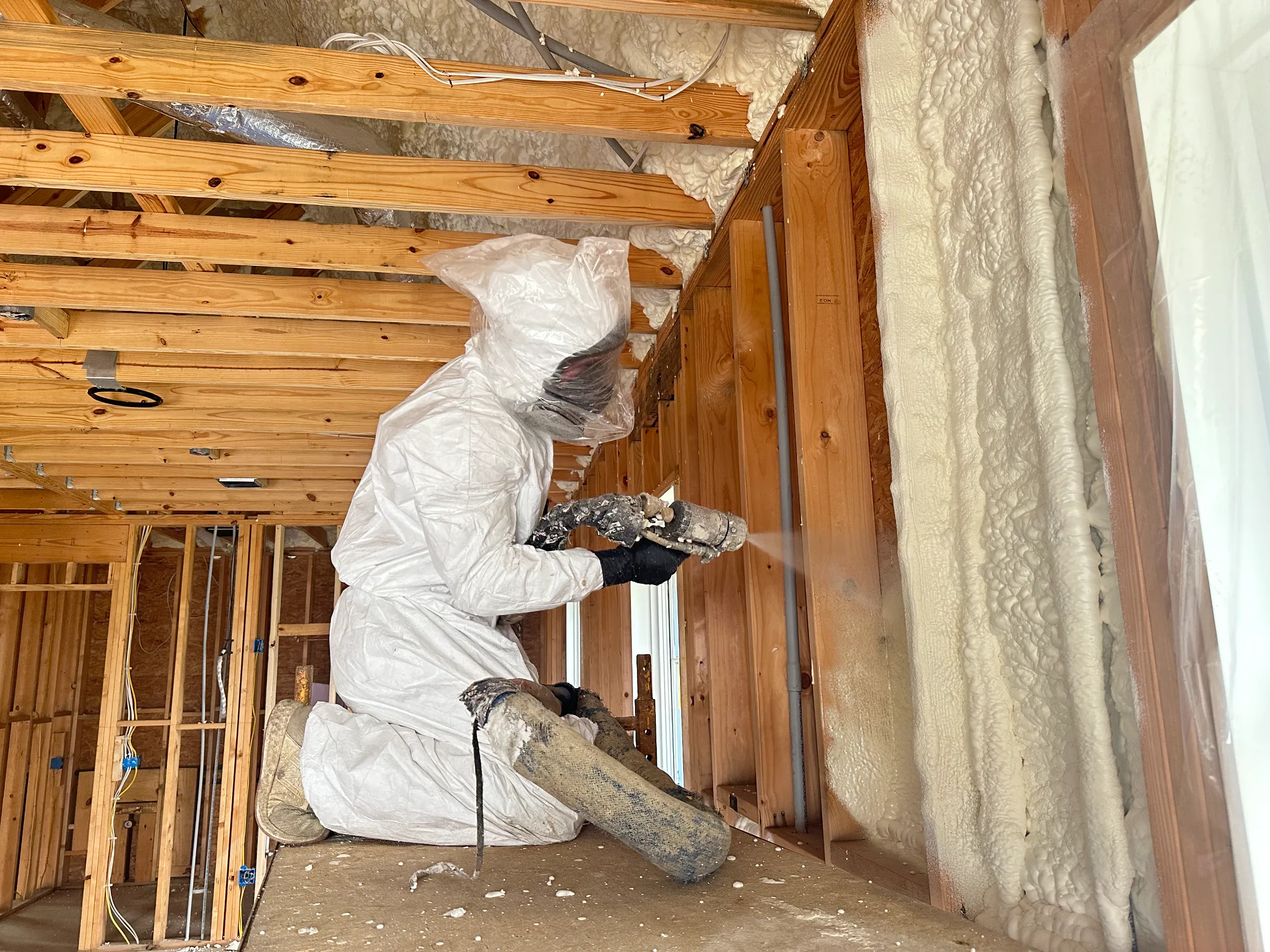
Foam doesn’t settle or lose loft the way older insulation can, so the performance on install day is roughly what you’re still getting decades later. It also acts as a vapor barrier, blocking the humidity that works into gaps fiberglass can’t stop, and keeping out dust and allergens.
That sealing effect shows up on utility bills too, since less air leaking in or out means your AC and heater run less. The added structural strength also helps during high winds.
A Practical Choice for Everyday Comfort
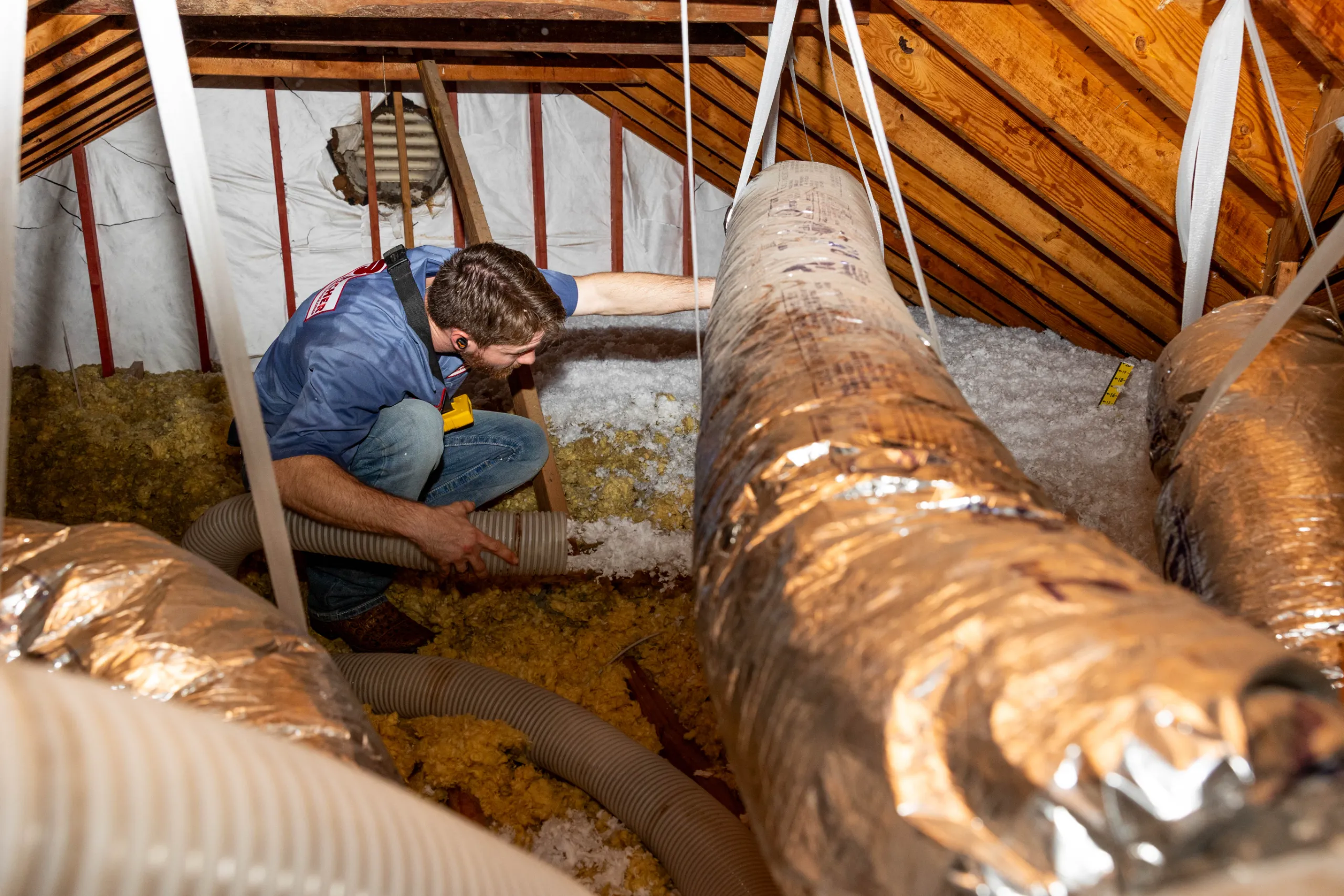
Fiberglass makes sense for interior walls, budget-conscious projects, and situations where old, degraded insulation needs replacing. It installs quickly and fits when allergy symptoms trace back to aging insulation rather than moisture or structural issues.
It won’t give you foam’s vapor barrier, so it’s not the right call for every space. But decades of use across Acadiana homes back up how reliable it is for a straightforward, lower-cost job.
Insulation Coverage for Every Part of Your Broussard Property
A comfort or energy problem rarely comes from the whole building at once. More often, it’s one specific area doing its job poorly while the rest of the property is fine, whether you own a home or run a business out of a commercial space. Here’s where we typically trace the problem back to:
The clearest sign is being able to see the tops of your attic joists instead of an even layer of insulation covering them. A few other common indicators:
- Energy bills that keep climbing, even though your HVAC system is running fine
- An attic that feels noticeably hotter than the rest of the house in summer
- Insulation that looks thin, patchy, or compressed rather than evenly distributed
- Rooms directly below the attic are harder to keep comfortable than the rest of the house
Foam expands and seals every gap it touches, while fiberglass fills a cavity without sealing it. That’s why foam holds up better against humidity, while fiberglass stays the budget-friendly pick for simpler jobs.
Yes, and it comes down to sealing rather than scent-masking. Spray foam closes off the small gaps where humid outside air gets in, and closed-cell foam goes a step further by acting as a vapor barrier. Less humidity means fewer of the conditions mold and mildew need to grow, which is typically what’s producing the smell in the first place.
It depends on the condition of what’s already there, not how old it is:
- If existing insulation is intact and simply thin, we can often add to it without removing anything
- If it’s compressed, wet, or shows signs of rodent damage, it usually needs to come out before new insulation goes in
- An in-person evaluation is the only reliable way to tell which situation applies to your home
The attic gets the most attention, but it’s rarely the only place insulation is doing (or failing to do) its job:
- Exterior and interior walls affect how evenly the temperature is distributed across different rooms
- Subfloors and crawl spaces are common trouble spots in pier-and-beam homes, especially where moisture or buckling floors are involved
- Roof decking insulation matters most when converting attic space into usable square footage
- Pole barns and other outbuildings often go completely uninsulated, even when they’re used for storage that’s sensitive to heat or humidity
Every Technician Is Ours, Not a Subcontractor’s
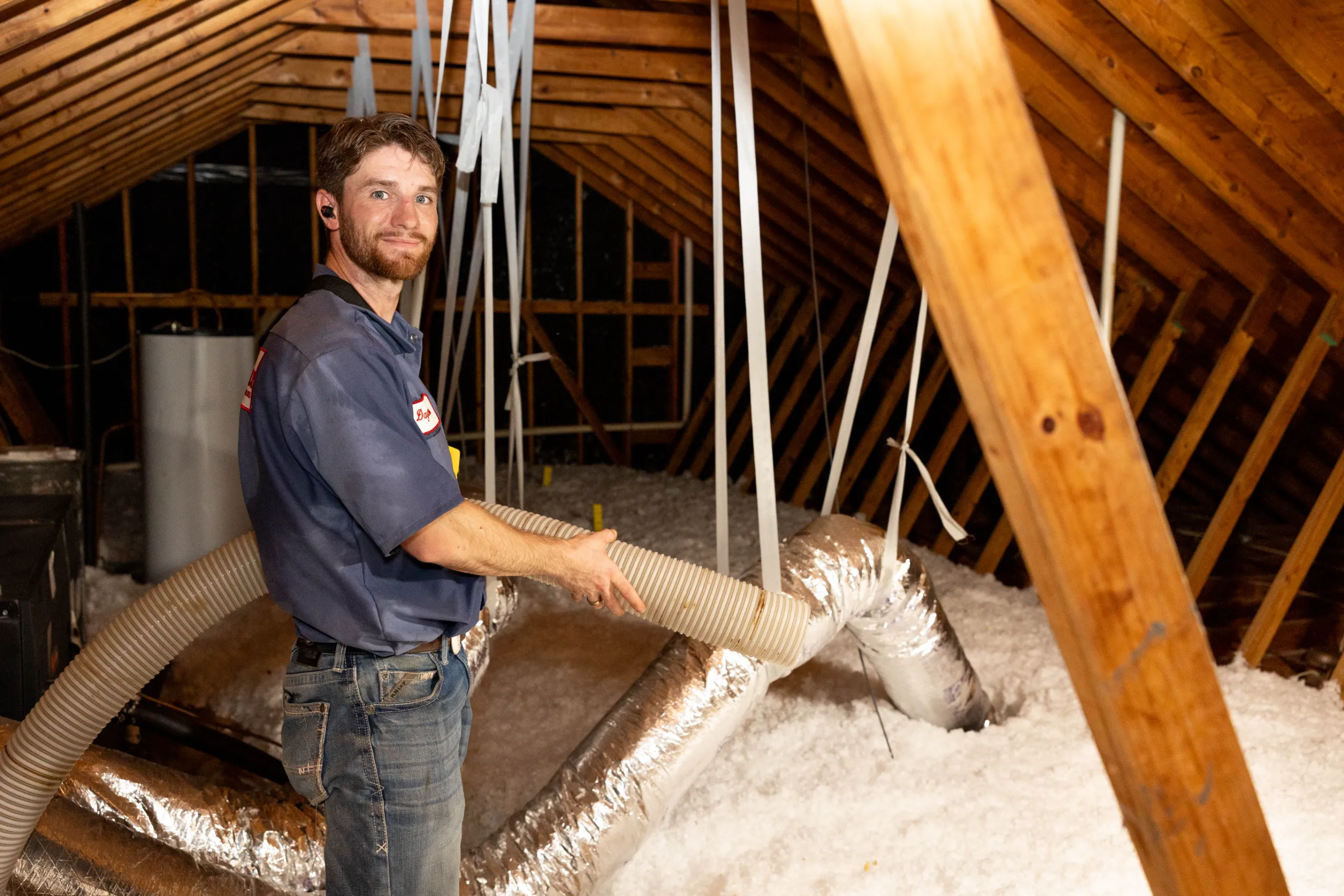
Anyone can hire a crew for a day. We don’t. Every technician on your property is a full-time Butcher employee, background-checked and drug-tested, with plenty having spent a decade or more learning the building science behind why insulation fails.
That means the person sealing your attic knows why a gap left open or a moisture barrier placed incorrectly turns into a mold problem later, and takes the time to avoid it.
Get Insulation Insight, Straight From the Crew
Find Out What Your Home Actually Needs
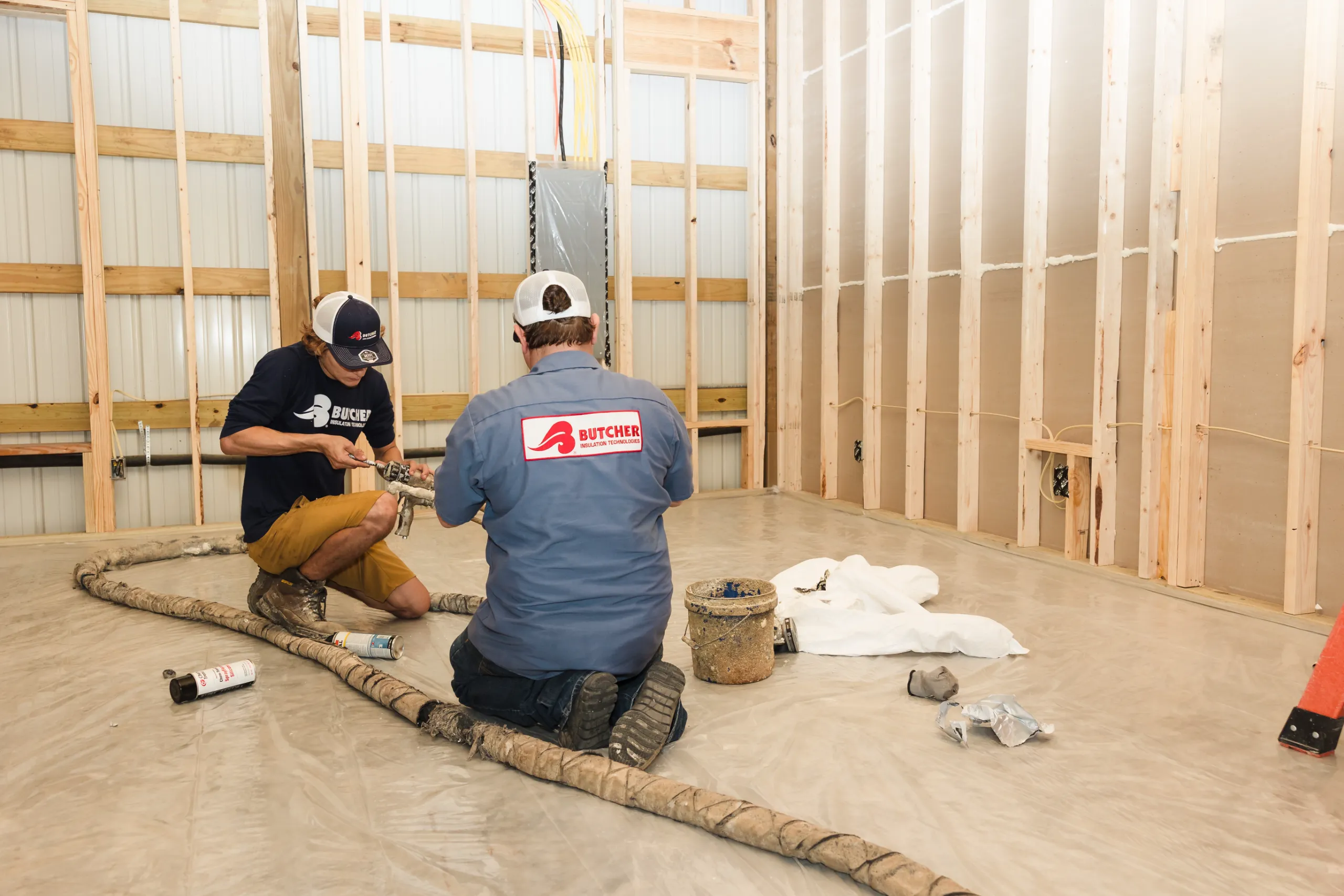
New subdivision or a century-old foundation, the only way to know what your home needs is to have someone look. We’ll walk the property and explain your options without a pitch attached.
Request a free estimate and find out whether spray foam, fiberglass, or a mix of both fits your Broussard home or business.